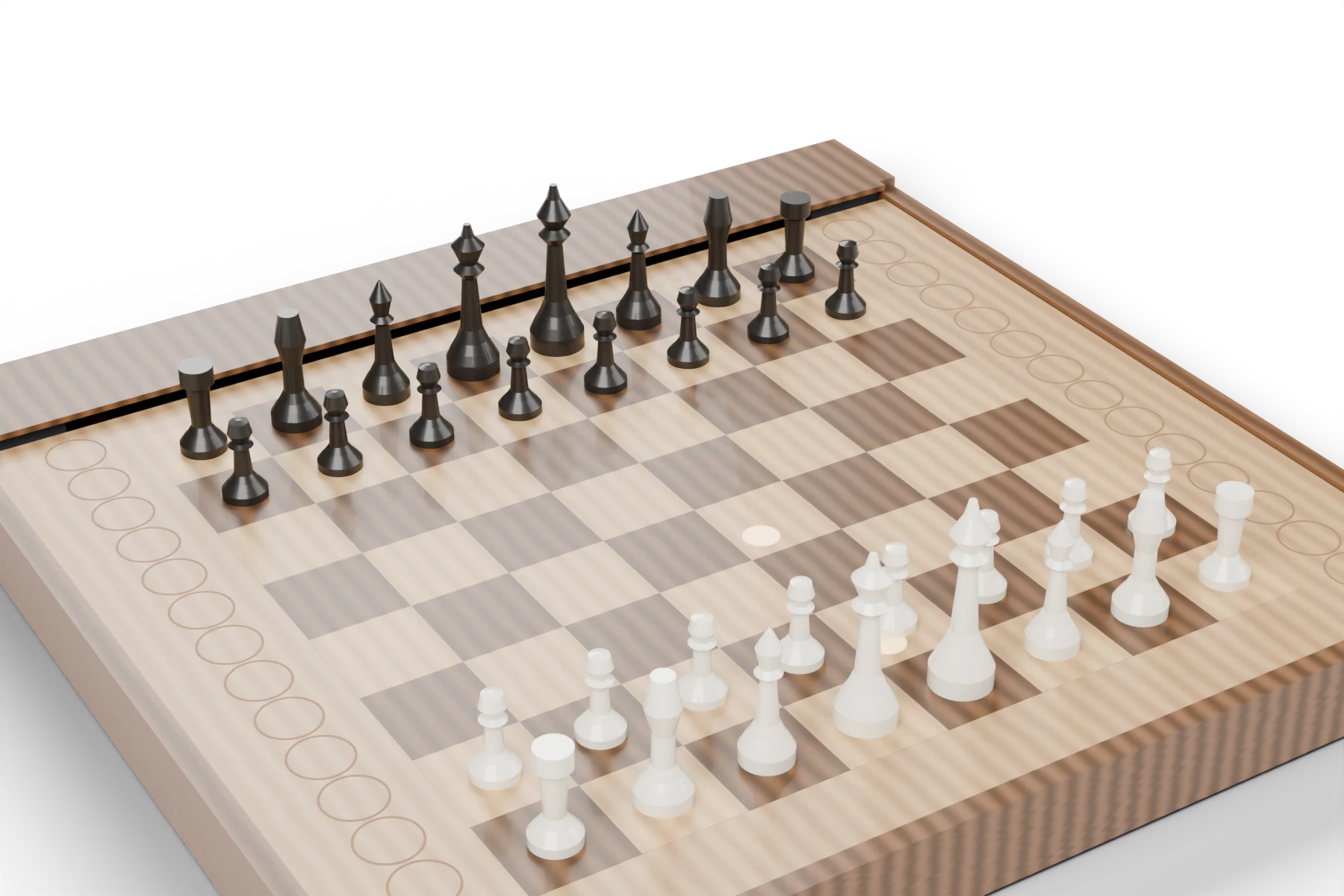
A wood-look chess board that plays you. You move a piece, it answers by sliding its own pieces into place with a magnet hidden under the board. One design across the mechanism, three circuit boards, a light-well plate and the firmware.
Designed. First build in progress. Designed in ~3.5 agent-hours (wall clock, plus 37 min of firmware in parallel). 0 engineer-hours so far: the engineer review is still to come. Nothing has been built or tested yet; bench tests come first.Play a computer at the strength you pick, a friend online, or watch it replay a famous game. Every move happens on a real board with real pieces.
Numbers come from the design and simulation. Nothing here has been measured on hardware yet.
A single belt drives a carriage on low-profile rails. Two electromagnets on the carriage grab a piece through the board top. The main board and eight sensor strips sit in the same 47.5 mm.
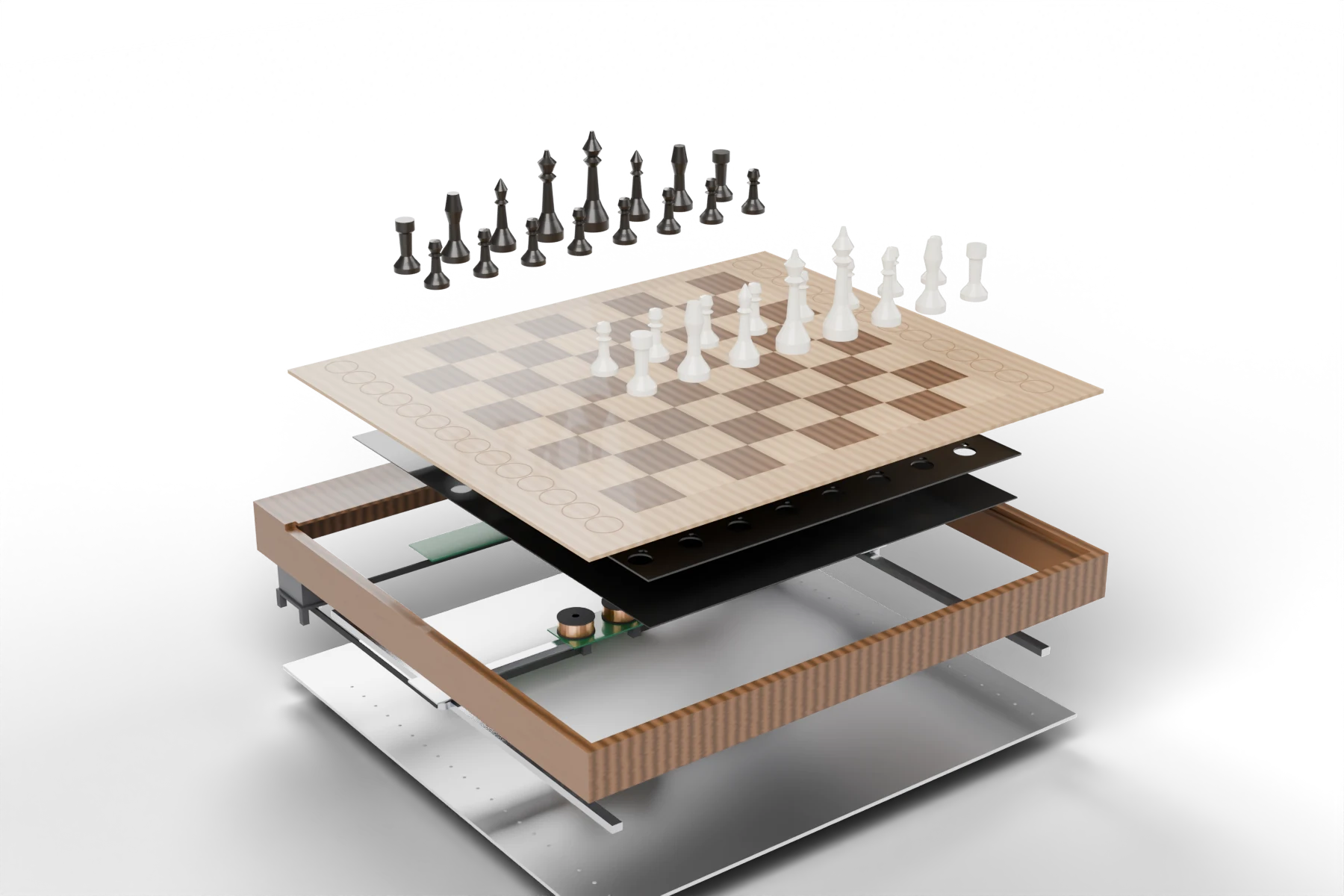
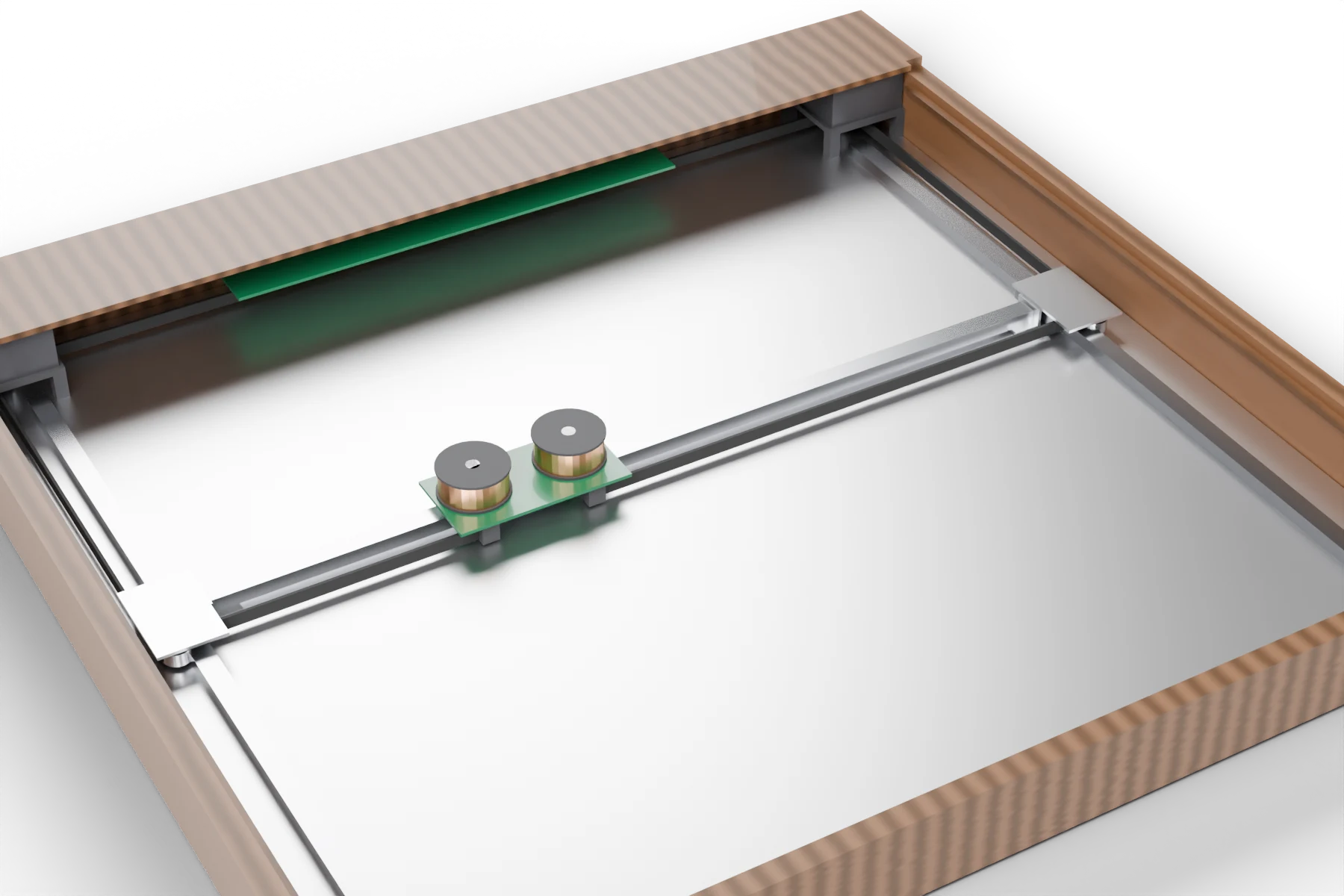
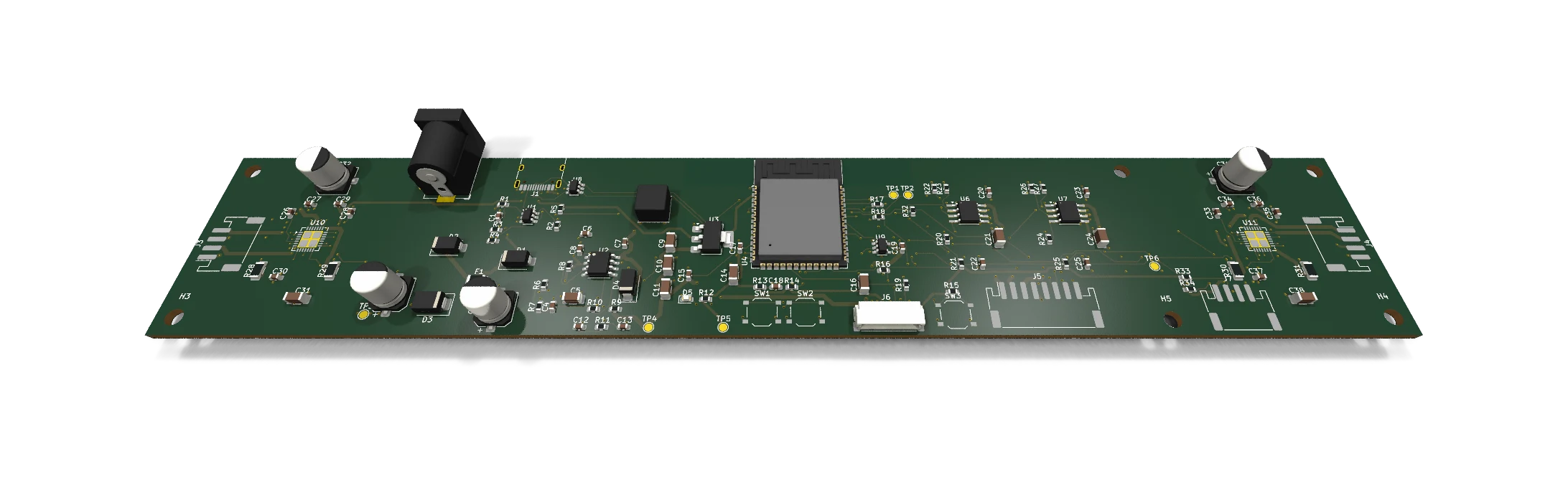
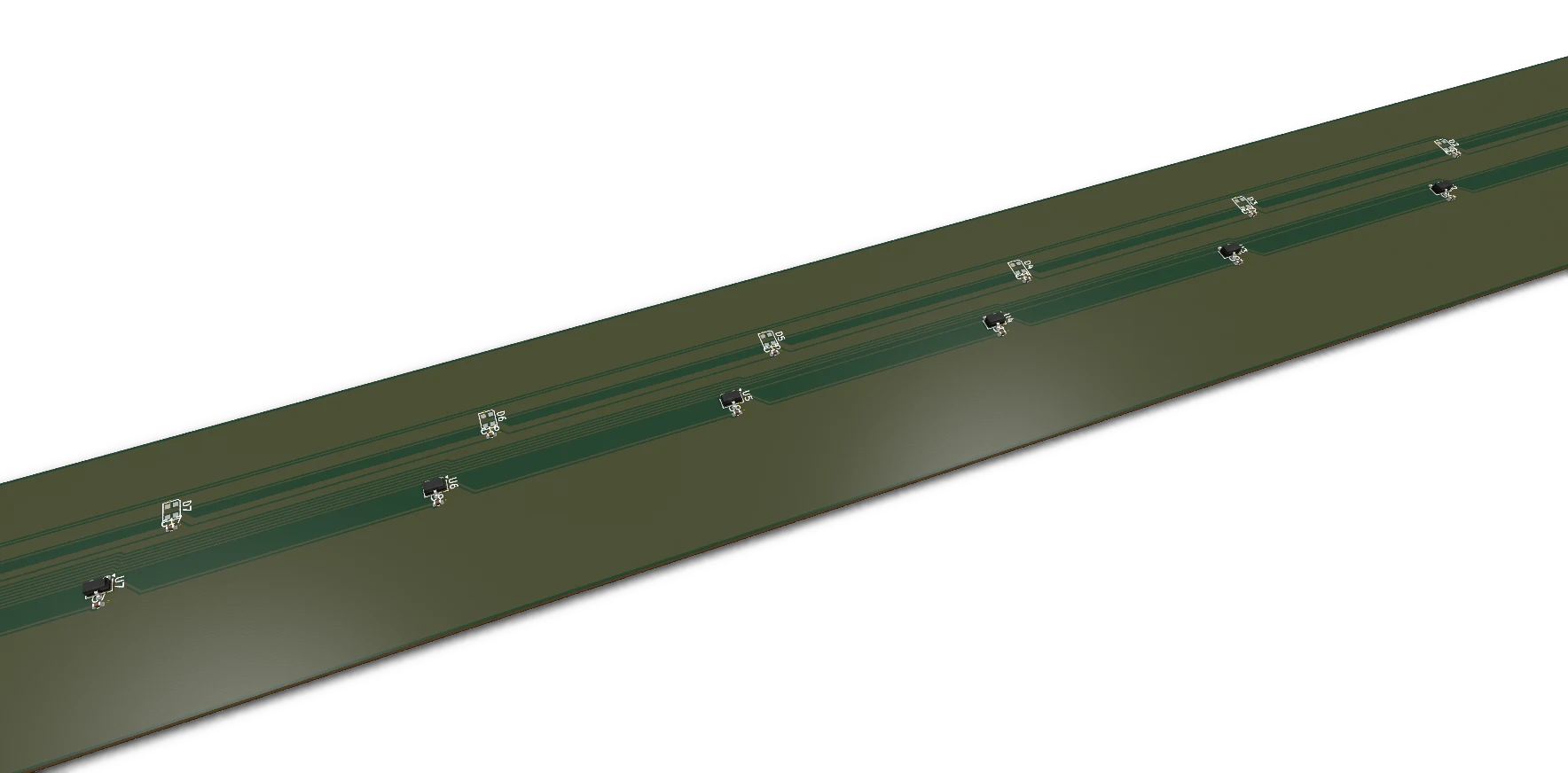
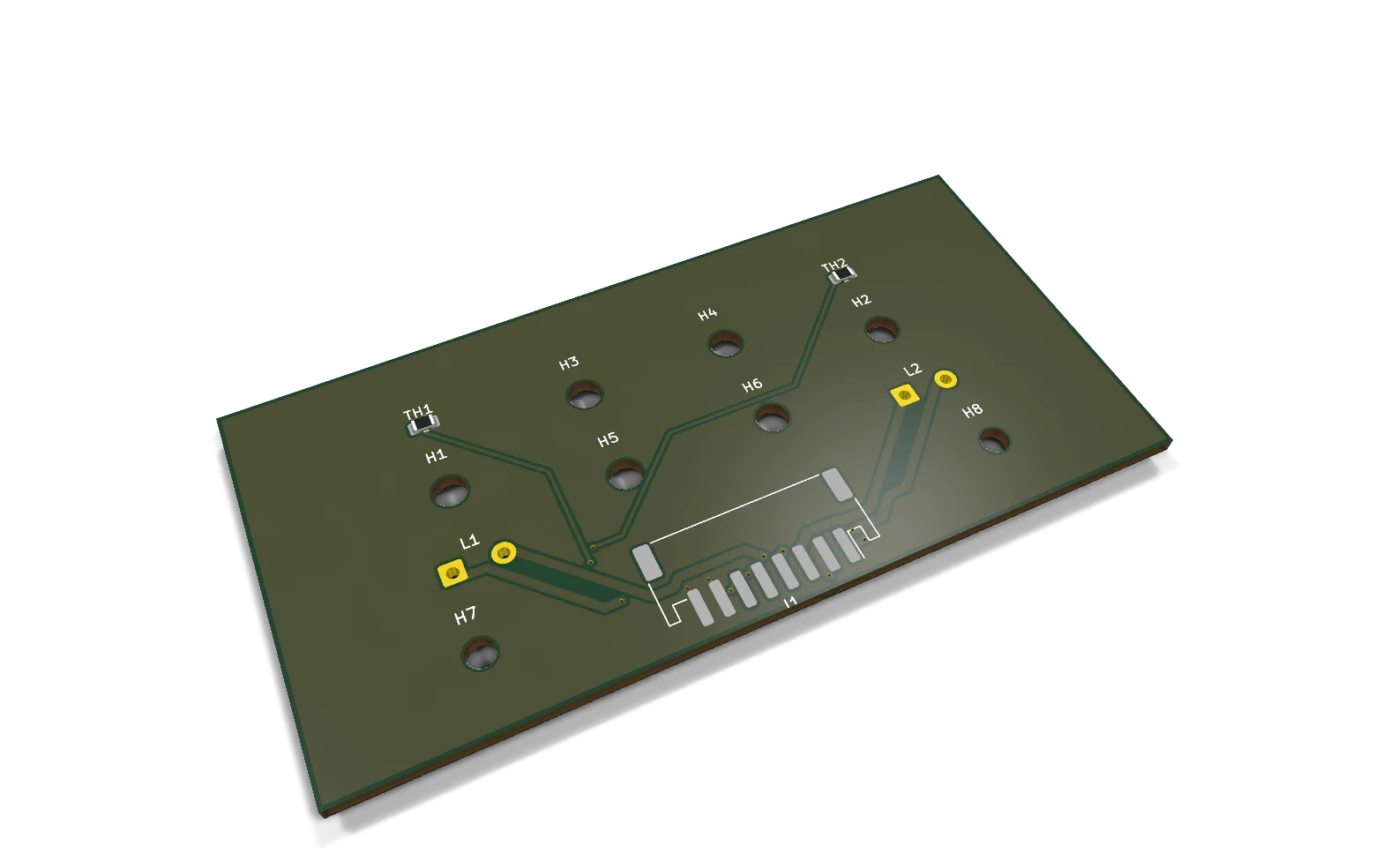
Each part of this board fights another one. These are the five fights that shaped it, and the call we made on each.
A thinner top pulls harder, but sags and leaves no room for the lights. A stronger magnet also presses the piece down harder, so friction rises with it.
Call: a 7.6 mm gap, two small electromagnets with thin cores so pieces let go cleanly, and felt that has to test slippery enough. If it doesn't, the pieces get PTFE dots instead.
A switched-on magnet looks like a piece to the sensor above it.
Call: electromagnets, which have no field when off. The board only reads its sensors with the coils off and settled, and never powers them while it waits for you.
The piece trails the magnet by a few millimetres. Move too fast and it slips off. Faster also means louder.
Call: gentle acceleration, at least 3x under the slip point. The carriage overshoots slightly, then wiggles to centre the piece. A 244-move simulated game set averages 3.5 s a move.
A stiff aluminium beam would push the board past 50 mm thick.
Call: the beam is a bare steel rail hung low, with a one-belt layout and flat motors tucked under a rear ledge. 2.5 mm to spare.
A piece sliding along a square edge has to squeeze between its neighbours.
Call: 45 mm squares and a slightly smaller tournament-style set. The planner checks every path against the real piece sizes and moves a blocker aside if it has to. The capture lanes make it 512 mm wide instead of about 450.
Describe it to hardcore and get a design plan free for your first 3 ideas: architecture, real parts in stock, a cost estimate and the risks.
Request accessNext example: robot hand →