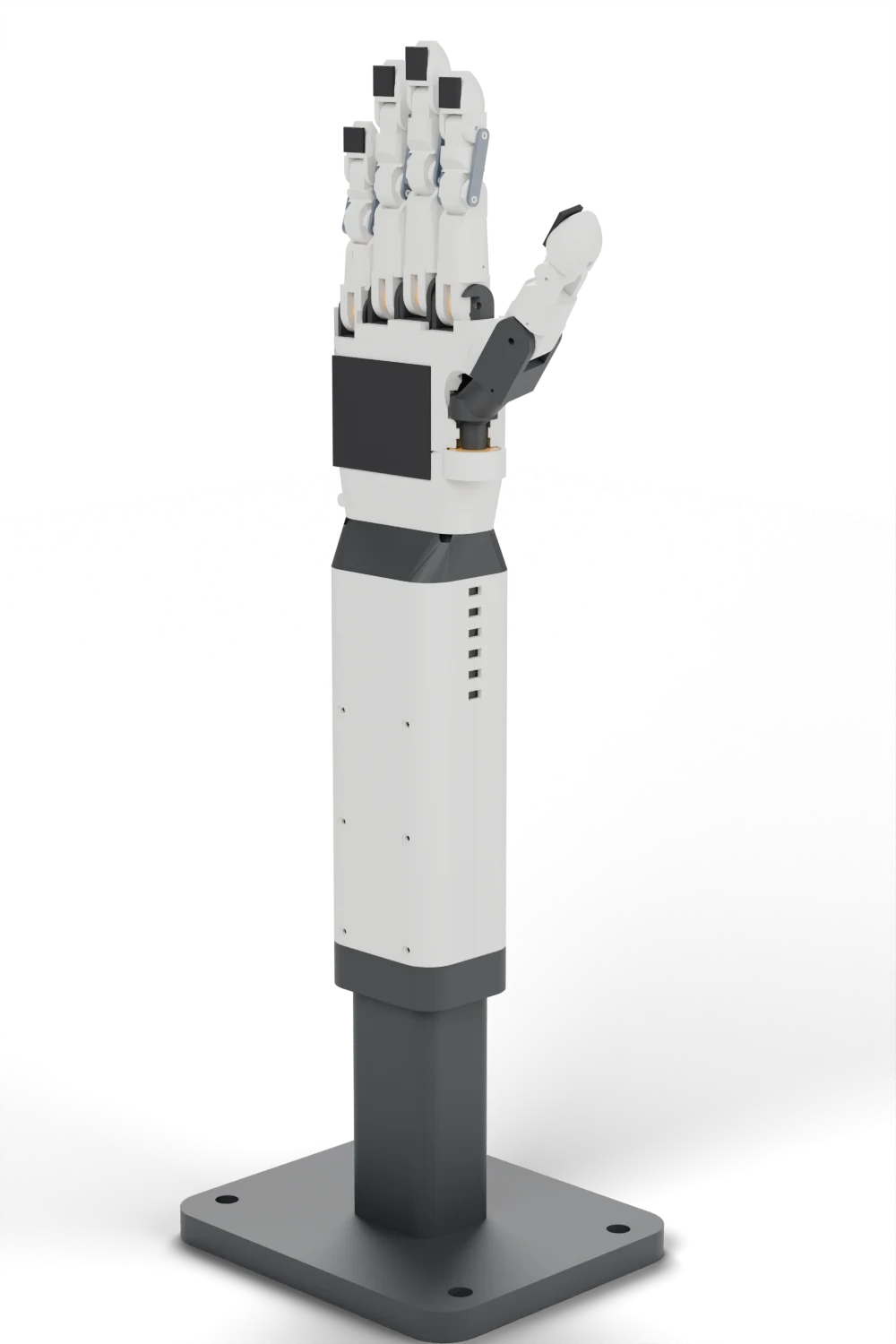
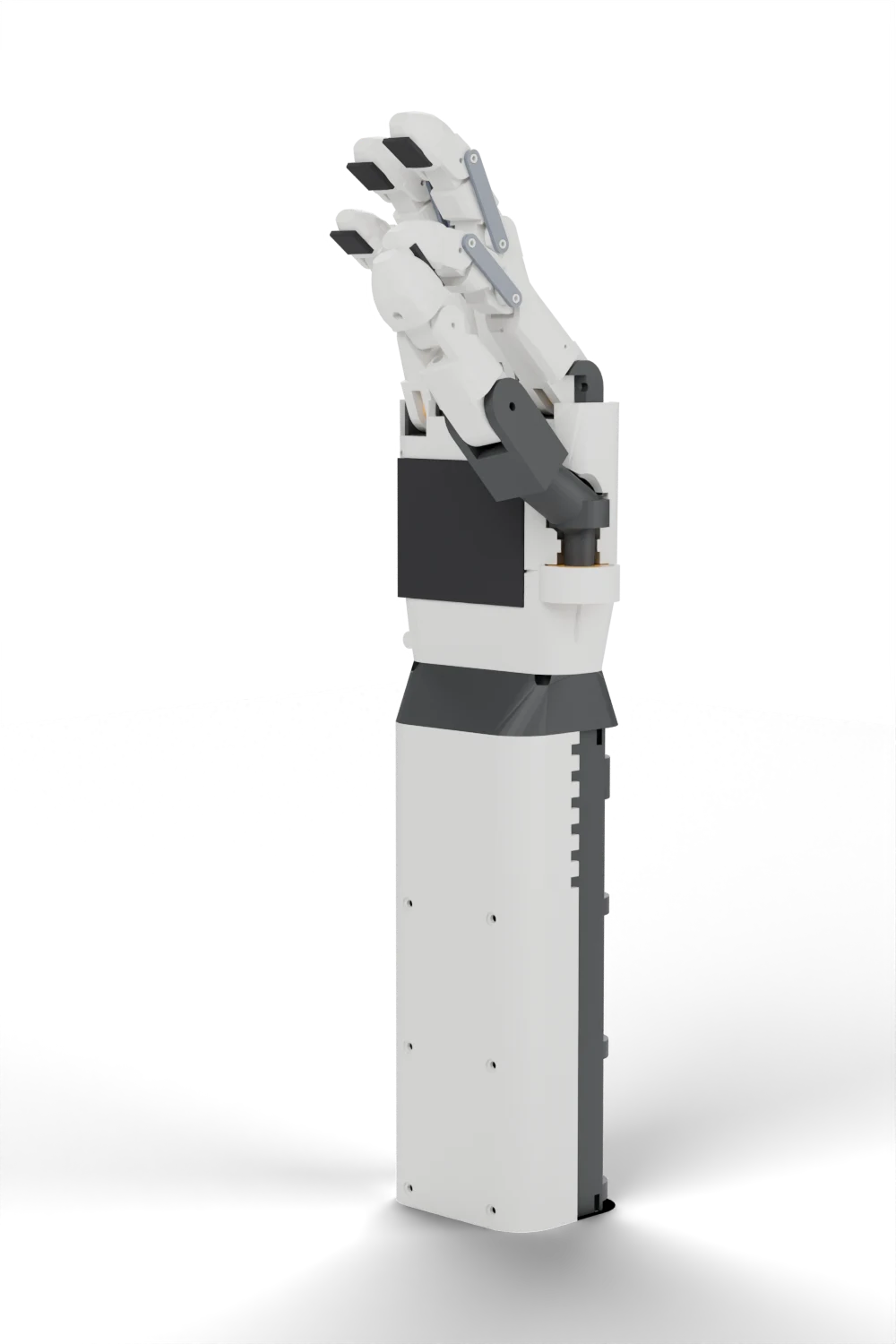
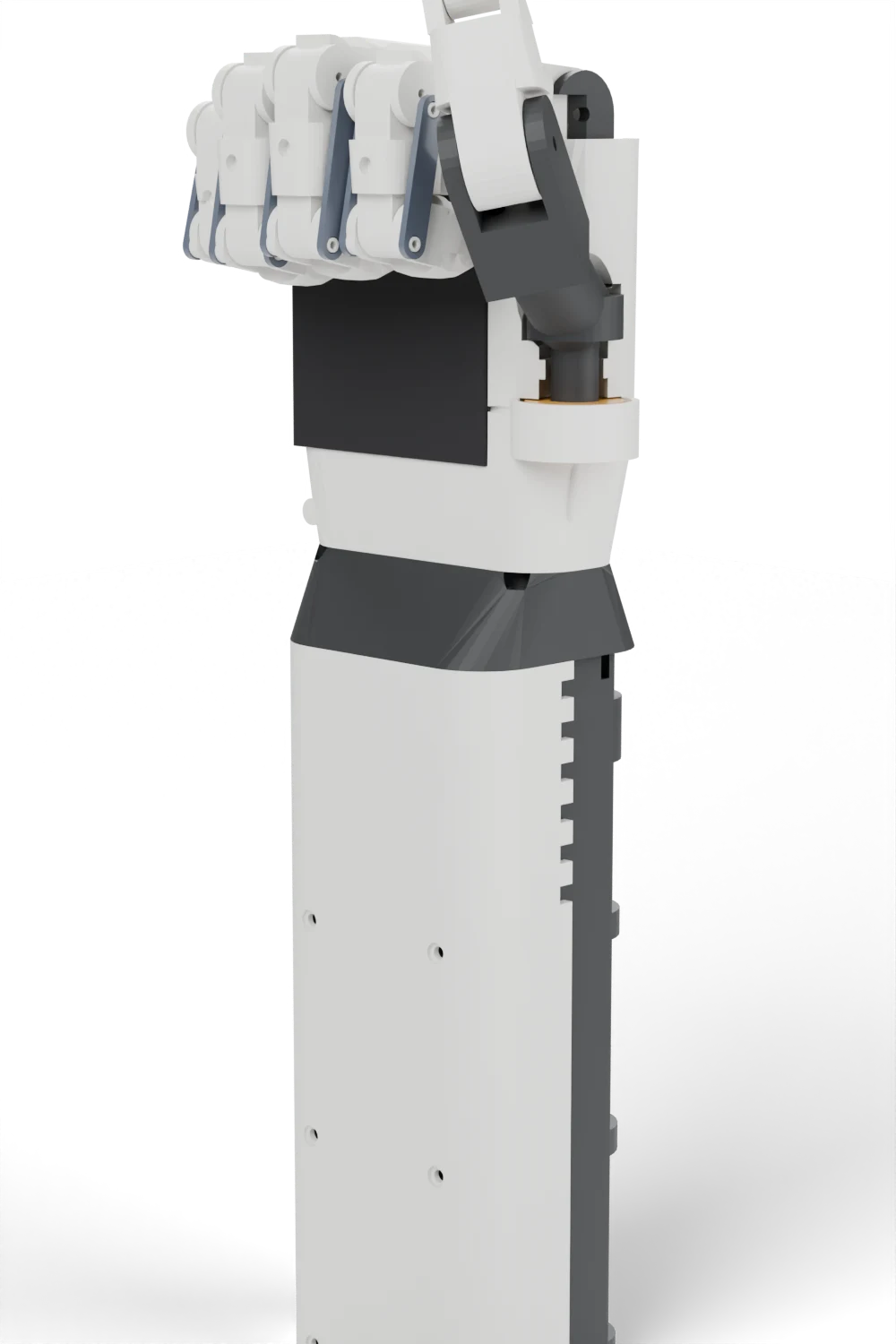
A human-sized, five-finger hand on a 200 mm forearm. It's designed to play rock-paper-scissors with you, then pick up an egg without cracking it. Six motors, the driver board and the firmware were designed as one.
Designed. First build in progress. ~5.4 agent-hours so far (wall clock). 10 board connections are left to route by hand. 0 engineer-hours so far: the engineer review is still to come. Nothing has been built or tested yet.A hand you can bolt to a robot arm or stand on a desk and drive from Python. Built to show grip, gentleness and speed in one short demo.
Targets and design numbers. Nothing here has been measured on hardware yet.
All six motors and the board live in the forearm. Tendons run through the wrist to the fingers, so the hand itself stays light. The board is 56 x 90 mm and needs no heatsink.
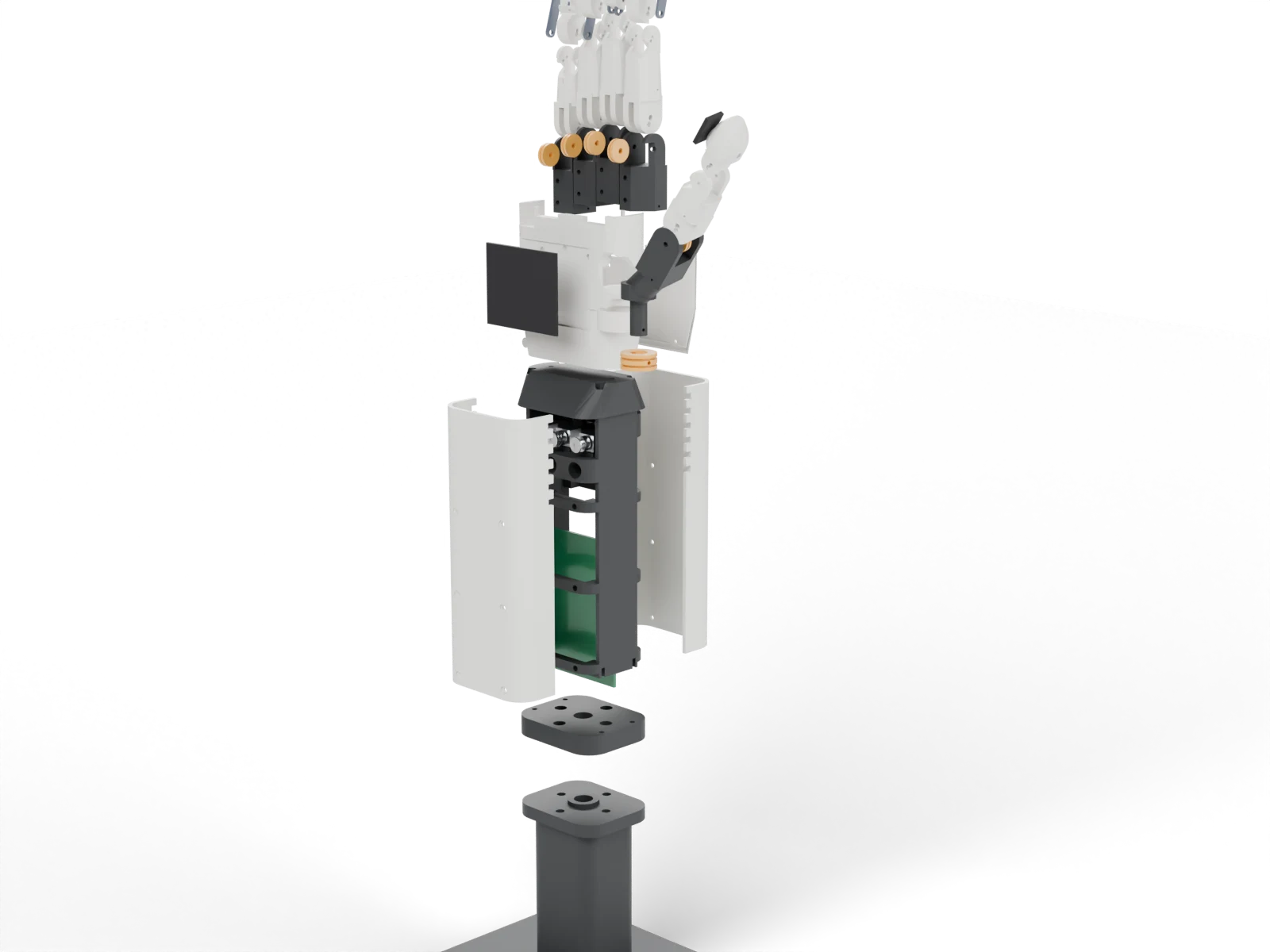
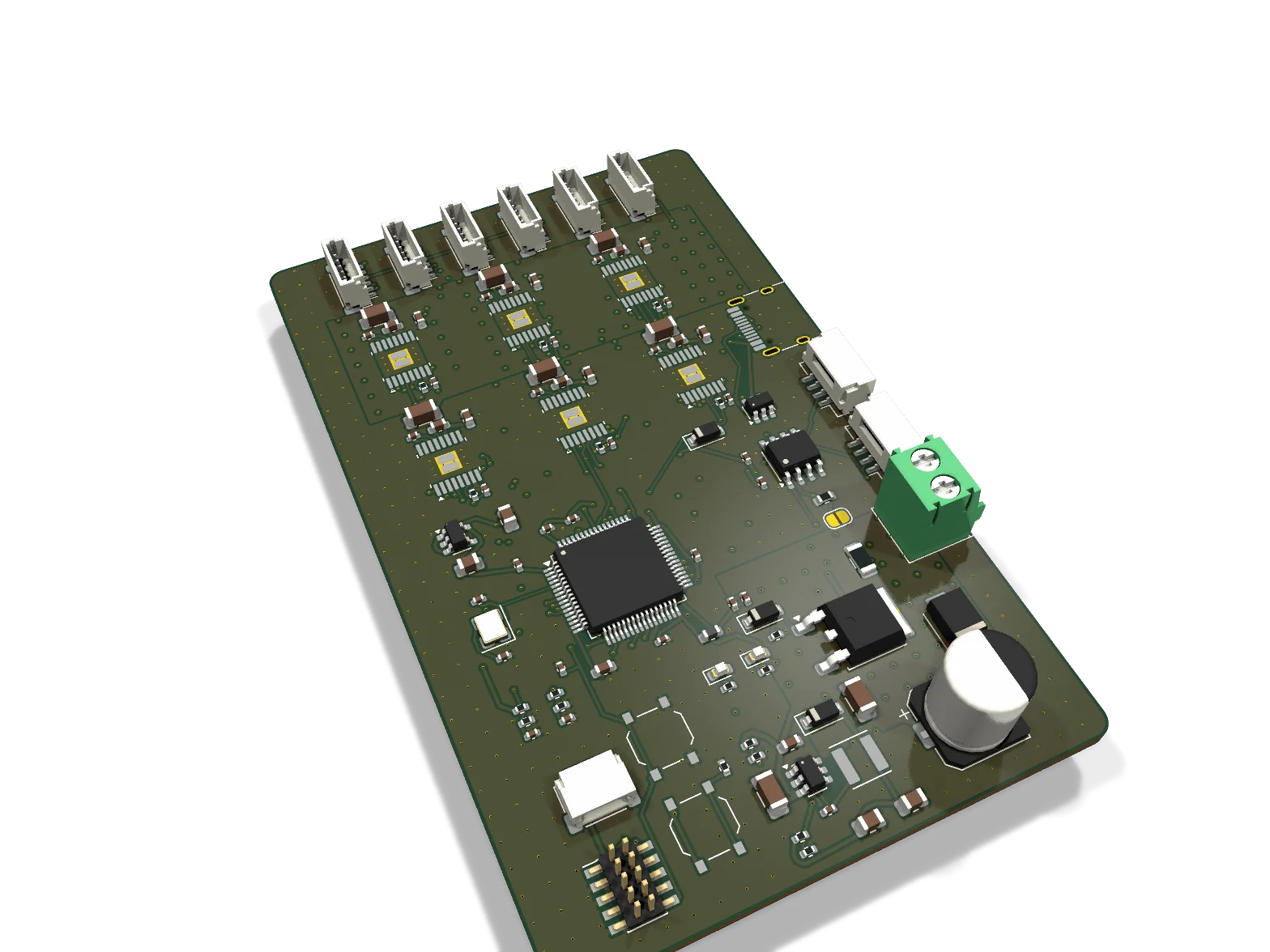
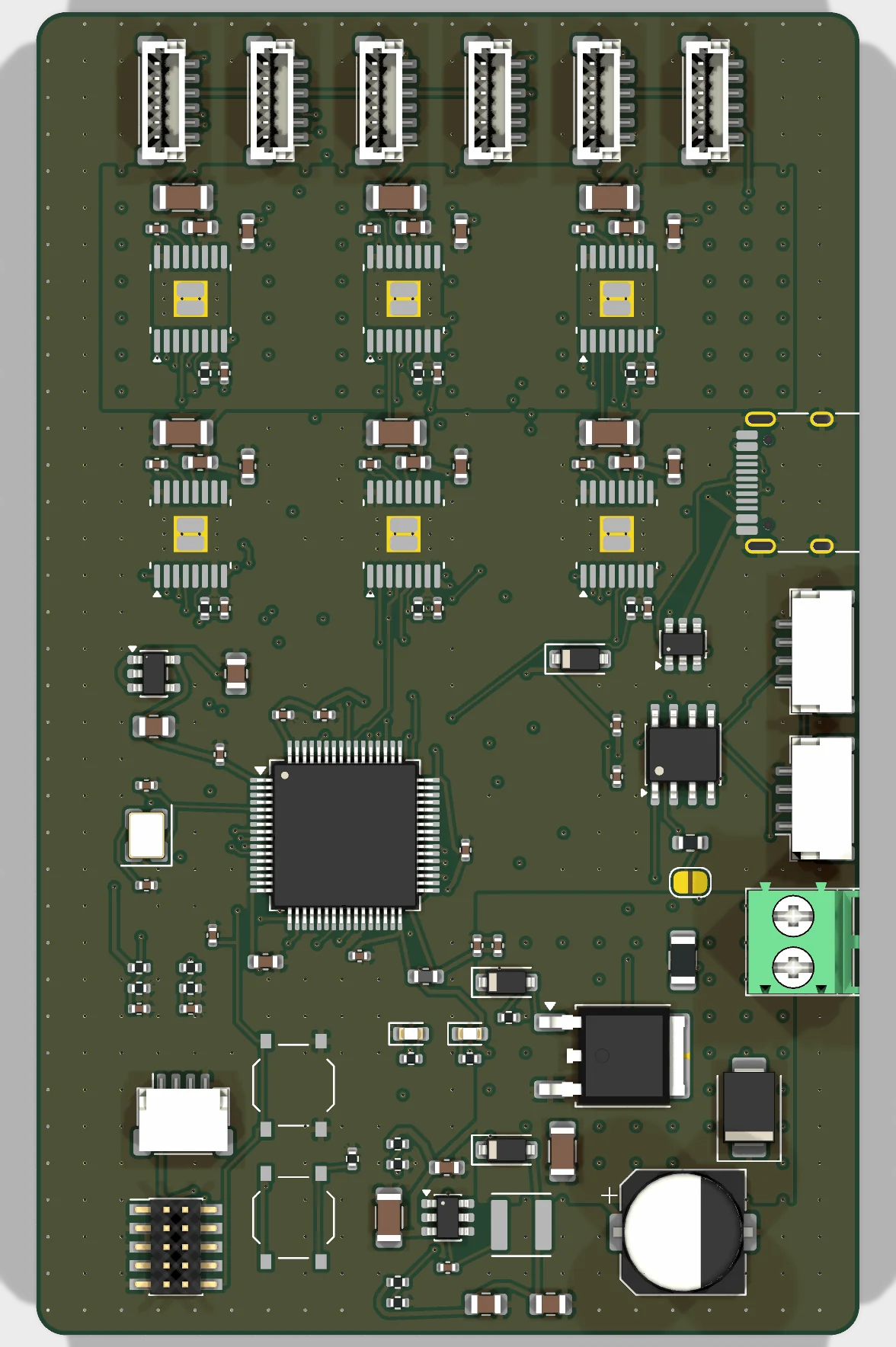
Hands are one of the hardest packaging problems in robotics. Motors, tendons, sensing, drivers and firmware all fight for the same space. Here's how we settled each fight.
Brushless motors give finer force control, but need more electronics and firmware, and more room.
Call: small geared motors with built-in encoders. They fit the weight budget with about 300 g to spare, and gear friction lets the hand hold a bottle at almost no current. Brushless stays on the list for v2.
The limit isn't the motor, it's what the gearbox can take. Ratio and spool size trade closing speed against pinch force.
Call: one ratio for all five finger motors that meets both the 0.7 s close and the 5 N pinch, and a slower, stiffer one for thumb rotation, which needs to hold still more than move fast.
Motors in the palm make a self-contained hand. In the forearm, they keep weight and heat away from what you're holding.
Call: forearm. About 100 g less ahead of the wrist, simpler wiring, and seven tendons through the wrist in low-friction tubes.
The board runs cool. The motors are the real heat problem during a long hold.
Call: fix it in firmware. After gripping, current ramps down until the encoder sees a tiny slip, then holds just above that. A per-motor heat model limits hard pinches to safe bursts.
A finger needs to wrap a bottle and also stay stiff for a fingertip pinch. With every joint free, it wraps, but the tip buckles in a pinch.
Call: the base joint is free and the last two are linked, so the finger wraps a bottle by itself and stays stiff for a pinch.
Describe it to hardcore and get a design plan free for your first 3 ideas: architecture, real parts in stock, a cost estimate and the risks.
Request accessOther example: chess board →